
Blog
Top 10 Carbon Facial Machine Types for Global Buyers
Carbon Facial Machine technology has moved from boutique treatment rooms into dermatology clinics, beauty salons, and medical spas worldwide. Its appeal is practical: a dark carbon lotion covers the skin, absorbs laser energy, and creates visible exfoliation with limited downtime. Yet product quality varies sharply. Buyers must examine wavelength, pulse control, cooling systems, treatment presets, certification, and after-sales training.
Market data explains the growing interest. Grand View Research valued the global aesthetic medicine market at approximately USD 18.2 billion in 2022, with strong projected growth through 2030. Fortune Business Insights also identifies expanding demand for laser-based cosmetic procedures, driven by shorter recovery periods and rising consumer interest in non-surgical care. However, these reports generally group carbon peeling with broader laser or aesthetic-device categories. Precise Carbon Facial Machine sales figures remain difficult to verify. That limitation matters.
Dermatologist Dr. Davin Lim has emphasized, “The laser is only as good as the operator.” His warning applies directly to global purchasing decisions. A powerful device cannot replace trained assessment, calibrated settings, eye protection, and realistic skin-response guidance. Buyers should also check whether suppliers provide documented testing, transparent specifications, and local compliance support.
This guide compares ten Carbon Facial Machine types for international buyers. It considers practical differences, not just advertising claims. Some machines look impressive on paper. Their service support may disappoint. That is where careful evaluation becomes essential.
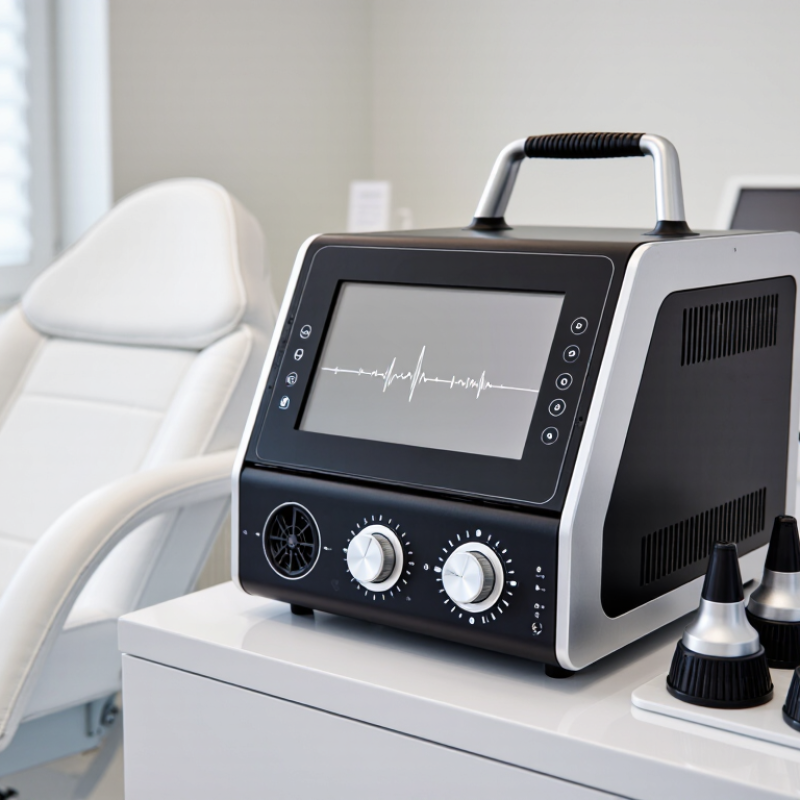
What Carbon Facial Machines Are and How They Work
Top 10 Carbon Facial Machine Types for Global Buyers
Carbon facial machines are professional aesthetic devices used with a thin carbon lotion. The lotion settles into pores and uneven surface areas. A laser then heats the carbon particles and removes them from the skin. This process may lift surface debris, reduce visible oiliness, and create a smoother appearance. It does not permanently change pore size.
Common machine types include Q-switched Nd:YAG, long-pulse Nd:YAG, dual-wavelength, fractional laser, picosecond, adjustable-spot, air-cooled, water-cooled, tabletop, and trolley-mounted systems. However, these labels can hide important differences. Some devices only offer one wavelength. Others combine carbon-peel functions with pigment or hair-focused settings. Buyers should check pulse duration, fluence range, spot size, cooling method, handpiece quality, and service access.
The operator usually cleans the skin, applies a thin carbon layer, and waits until it dries. Eye protection is essential. The laser passes over the face in controlled movements, often producing a light snapping sound. Afterward, the skin may feel warm or look mildly pink. Results depend on skin condition, carbon coverage, settings, and operator training.
A stronger setting is not automatically better. This is easy to forget. Darker or sensitive skin may need conservative parameters and careful monitoring.
Global buyers should also verify electrical standards, documentation, safety certification, and local professional-use rules before purchase. Some marketing claims sound impressive, but clinical judgment still matters.
The 10 Main Types of Carbon Facial Machines
Top 10 Carbon Facial Machine Types for Global Buyers
The ten main types of carbon facial machines differ by laser source, structure, and treatment control. Handheld models suit mobile clinics and small treatment rooms. Tabletop units offer compact operation with steadier controls. Trolley machines provide stronger cooling, storage, and easier movement. Q-switched 1064 nm systems are widely used for carbon laser peels and deeper pigment concerns. Q-switched 532 nm systems target more superficial pigment, but require careful assessment. Dual-wavelength machines combine 1064 nm and 532 nm settings. Picosecond models deliver shorter pulses and may support selected pigmentation procedures. Fractional laser versions create controlled micro-columns for texture work. Multifunction systems may combine carbon peeling with cooling, ultrasound, or oxygen-related features. Entry-level machines usually provide fewer adjustments and simpler displays.
Tips: Confirm wavelength, pulse width, fluence, spot size, cooling, and service support before buying. Ask for test reports, user training, and electrical certification. A low price can hide expensive maintenance.
From practical purchasing experience, usability matters as much as output power. Clear menus reduce operator mistakes. Replaceable protective parts also support long-term hygiene. Buyers should match the machine with trained professionals, local regulations, skin assessment procedures, and suitable eye protection. Carbon lotion quality and preparation also affect results. No device is perfect. Some machines look impressive but offer limited adjustment range. Request a live demonstration, inspect the handpiece, and review real maintenance records before signing an order.
Key Features and Technical Differences Among the 10 Types
Top 10 Carbon Facial Machine Types for Global Buyers
Key Features and Technical Differences Among the 10 Types
Global buyers should separate true carbon-peel lasers from adjacent aesthetic devices. The ten common configurations include Q-switched 1064 nm, dual-wavelength 532/1064 nm, picosecond 755 nm, picosecond 1064 nm, long-pulsed 1064 nm, IPL, fractional 1550 nm, fractional CO2, Er:YAG, and laser-RF hybrid systems. Q-switched 1064 nm remains practical for carbon lotion vaporisation, with adjustable fluence and nanosecond pulses. Picosecond systems deliver shorter pulses, but higher purchase costs and stricter calibration demands. IPL uses broad-spectrum light, not a single laser wavelength. That difference matters.
Fractional 1550 nm targets deeper dermal heating, while CO2 and Er:YAG create controlled ablation. They are not automatically suitable for every carbon facial protocol. IPL systems require accurate filters, skin cooling, and pulse-duration control. Laser-RF hybrids add thermal energy, which may improve versatility but complicates treatment parameters. Check spot size, repetition rate, pulse width, fluence range, cooling method, and handpiece stability. Small details matter.
The 2023 ISAPS Global Survey recorded about 19.1 million nonsurgical aesthetic procedures worldwide. That figure indicates demand, not proof of equal clinical value. Buyers should request peer-reviewed evidence, electrical safety documentation, and local regulatory clearance. IEC 60601-1 testing supports electrical safety, but it does not guarantee treatment outcomes. I have seen specifications overstated in sales sheets. Ask for measured output data, service records, operator training, and realistic downtime guidance. Marketing language can be imperfect.
Top 10 Carbon Facial Machine Types for Global Buyers - Key Features and Technical Differences Among the 10 Types
| No. | Machine Type | Typical Wavelength | Pulse / Energy Characteristics | Key Technical Features | Primary Carbon-Facial Role | Main Advantages | Important Limitations |
|---|---|---|---|---|---|---|---|
| 1 | Q-Switched Nd:YAG Single-Wavelength | 1,064 nm | Short nanosecond pulses; high peak power with low average thermal load. | Fast Q-switched pulse delivery, adjustable spot size, repetition rate and fluence; usually includes a handpiece for broad facial coverage. | The most established configuration for carbon-lotion photoacoustic exfoliation and surface-cleansing treatments. | Strong carbon-particle interaction; suitable for a wide range of skin tones when properly selected and operated. | Requires trained parameter selection; excessive fluence or repeated passes can increase irritation or pigmentary risk. |
| 2 | Q-Switched Nd:YAG Dual-Wavelength | 532 nm and 1,064 nm | Nanosecond pulses at two wavelengths; 532 nm is more superficial and 1,064 nm penetrates more deeply. | Two wavelength paths, interchangeable or integrated handpieces, and independent parameter controls. | Carbon peel treatments with added flexibility for superficial discoloration and selected deeper targets. | Broader treatment versatility than a single-wavelength system. | The 532 nm wavelength has greater melanin absorption and generally demands more conservative use on darker or recently tanned skin. |
| 3 | Q-Switched Nd:YAG with Fractional Lens Array | Usually 1,064 nm | Nanosecond energy divided into multiple microbeams or beamlets. | Fractional optical lens array creates a treated-and-untreated microzone pattern instead of a uniform beam profile. | Combines carbon-particle treatment with more localized textural or pore-focused procedures. | Can provide a broader treatment concept while limiting the percentage of skin exposed per pass. | Not equivalent to a conventional carbon peel; lens quality, beam uniformity and operator technique strongly affect results. |
| 4 | Picosecond 1,064 nm Nd:YAG | 1,064 nm | Picosecond pulses, typically shorter than Q-switched nanosecond pulses, producing high peak power and strong photoacoustic action. | Very short pulse duration, digital energy control, selectable spot sizes and optional diffractive or fractional optics. | Carbon-assisted brightening and texture-oriented treatments where reduced bulk heating is preferred. | High peak power with potentially less thermal diffusion than longer pulses. | Higher equipment cost and more demanding calibration; picosecond operation does not automatically eliminate adverse effects. |
| 5 | Picosecond 755 nm Alexandrite | 755 nm | Picosecond pulses with strong melanin absorption relative to 1,064 nm. | Short pulse duration, focused spot delivery and optional diffractive beam-splitting optics. | May be used for carbon-related brightening or pigment-focused protocols rather than a standard all-purpose carbon peel. | Efficient interaction with superficial pigment and carbon particles. | Greater melanin absorption can increase the risk of post-inflammatory pigment changes, especially on darker or tanned skin. |
| 6 | Long-Pulsed Nd:YAG | Usually 1,064 nm | Millisecond-range pulses with greater controlled thermal heating than Q-switched systems. | Longer pulse-width settings, contact or air cooling, and larger treatment spots are common. | An adjunctive heating or vascular-oriented platform; it is not the conventional first choice for carbon-particle fragmentation. | Useful for selected complementary indications and larger treatment areas. | Thermal exposure is higher than with Q-switched carbon-peel systems, so it may cause more discomfort or erythema. |
| 7 | Fractional CO2 Laser | 10,600 nm | Ablative infrared energy creates microscopic columns of vaporized tissue. | Scanning handpiece, adjustable microbeam density, pulse duration and dwell time; active cooling may be included. | A resurfacing alternative or complementary platform, not a traditional carbon peel machine. | More substantial resurfacing potential for selected texture and scar indications. | Ablative downtime, aftercare requirements and pigmentary risk are generally greater than with non-ablative carbon-peel systems. |
| 8 | Er:YAG Resurfacing Laser | 2,940 nm | Strong water absorption produces precise superficial ablation with comparatively limited thermal penetration. | Fractional or full-field scanning, variable ablation depth and selectable pulse modes. | A resurfacing-oriented alternative sometimes marketed alongside carbon facial services. | Precise superficial resurfacing and generally less residual thermal damage than CO2 at comparable ablative use. | It does not provide the same carbon-particle photoacoustic mechanism as a Q-switched or picosecond system. |
| 9 | IPL Carbon-Facial Platform | Broad-spectrum light, commonly about 500–1,200 nm | Non-coherent flashlamps emit a range of wavelengths; filters select the usable band. | Replaceable filters, adjustable fluence and pulse trains, plus integrated contact cooling on many systems. | A light-based facial platform sometimes paired with carbon products for cosmetic brightening and surface-refresh protocols. | Large spot sizes and broad-spectrum flexibility can support rapid coverage. | It is not a laser; wavelength selectivity is lower, and treatment suitability is strongly affected by skin tone, tanning and filter selection. |
| 10 | Multifunction Carbon Facial System | Usually combines 1,064 nm laser with non-laser modules | Laser module may use Q-switched nanosecond or picosecond pulses; auxiliary modules use different energy types. | May combine laser with hydradermabrasion, radiofrequency, ultrasound, oxygen spray or cooling; specifications vary substantially. | Designed for bundled facial workflows such as cleansing, carbon application, laser treatment, hydration and calming care. | Broad service menu and potentially better room utilization for clinics and beauty centers. | The name does not define performance; buyers must verify the actual laser source, wavelength, pulse duration, cooling, safety controls and certifications. |
How Global Buyers Can Compare Models and Suppliers
Global buyers comparing the top 10 carbon facial machine types should begin with treatment purpose, not appearance. Portable tabletop units suit small clinics and mobile services, while trolley models offer stronger cooling, storage, and easier workflow. Integrated systems may combine carbon peeling with cleansing or infusion functions, but they often require more training and maintenance. Compare laser wavelength, pulse settings, spot size, cooling method, treatment area, and electrical requirements carefully. A bright screen proves little.
Supplier evaluation needs the same discipline. Request technical files, user manuals, safety instructions, test reports, and clear certification details for your target market. Confirm whether the supplied voltage matches local standards. Ask about operator training, response times, spare parts, software updates, and warranty coverage. A supplier with a local service partner can reduce delays when a handpiece or cooling module fails. Get every promise in writing.
Price deserves caution. A cheaper unit may exclude shipping, installation, calibration, or replacement parts. I would also compare consumable costs over twelve months, not only the purchase invoice. Ask for treatment parameters and maintenance records from comparable installations, while protecting client privacy. Product demonstrations can be useful, yet polished demonstrations may hide difficult cleaning steps or unstable energy output. One overlooked detail matters: measure the treatment room door, not just the machine dimensions. My comparison would remain provisional until an independent technician reviews the documents and the device’s real operating data.
Safety Standards and Purchasing Factors Across International Markets
Top 10 Carbon Facial Machine Types for Global Buyers
Carbon facial equipment is sold in several formats, but not every type performs a true carbon peel. Common categories include Q-switched Nd:YAG, dual-wavelength laser, picosecond laser, fractional laser, IPL, LED, radiofrequency, ultrasonic, hydrodermabrasion, and oxygen-infusion devices. For carbon applications, buyers should verify the wavelength, pulse settings, fluence range, and intended clinical use. A polished brochure can still hide unclear specifications.
Safety requirements differ across international markets. Check electrical compliance under IEC 60601-1 and electromagnetic compatibility under IEC 60601-1-2. A manufacturer with ISO 13485 quality management and ISO 14971 risk controls may offer stronger documentation, but certificates must match the exact model. Market authorization, labeling, user manuals, and local registration rules also require review. Look for emergency-stop functions, cooling control, protective eyewear, skin-contact warnings, and traceable maintenance records. These details matter more than a bright screen or decorative housing.
Tips: Request test reports, serial-number records, and a sample user manual before purchasing. Ask whether trained technicians can service the device in your market. Confirm plug type, voltage, warranty coverage, spare-part access, and operator training. Perform a controlled patch test and follow the supplied protocol. Skin response can vary widely. I would not accept vague claims about “all skin types.” Even experienced operators should reassess settings, because a familiar treatment can still produce unexpected irritation.
Top 10 Carbon Facial Machine Types for Global Buyers
Typical primary wavelengths used in carbon facial and laser-peel systems. Actual specifications vary by configuration, pulse duration, fluence, and regional regulatory clearance.
Purchasing and safety factors: Verify laser classification, protective eyewear matched to every emitted wavelength, key-switch and emergency-stop functions, interlocks, user training, electrical safety testing, maintenance records, and market-specific regulatory documentation such as EU MDR, FDA requirements, UKCA, Health Canada, or TGA pathways. Confirm that the intended carbon-peel indication is covered by the device documentation in the destination market.
