
Blog
Top 10 3D Rendering Demo Services for Global Buyers
Global buyers now judge products before physical samples arrive. That shift makes a reliable 3D Rendering Demo service commercially important.
Grand View Research identifies strong growth in the global 3D rendering and visualization market, driven by real estate, product design, media, and online commerce. Autodesk’s 2024 State of Design & Make report also shows that digital tools increasingly influence business resilience, productivity, and customer communication. These findings suggest a clear market direction. Buyers want faster visual decisions, not merely attractive images.
The challenge is choosing the right provider. A polished showroom scene may conceal weak modeling, inconsistent textures, or slow revisions. Some vendors promise photorealism but provide little evidence of production experience. Others offer low prices while charging heavily for file preparation, animation changes, or international coordination. This guide reviews ten 3D Rendering Demo services for global buyers, considering visual quality, technical workflow, communication, pricing clarity, revision policies, and delivery reliability. Shortlist carefully. One overlooked detail can delay a launch.
The evaluation also reflects practical buyer concerns. Can the service reproduce a brushed metal finish under warm lighting? Can it deliver CAD-compatible files and localized product scenes? Does its portfolio show consistent work across furniture, architecture, packaging, or industrial equipment? These questions matter more than impressive slogans. The ranking is not absolute, because project goals differ. A boutique studio may outperform a large provider on creative direction, while a global platform may offer better capacity and support. Readers should verify current portfolios, references, security practices, and commercial terms before signing.
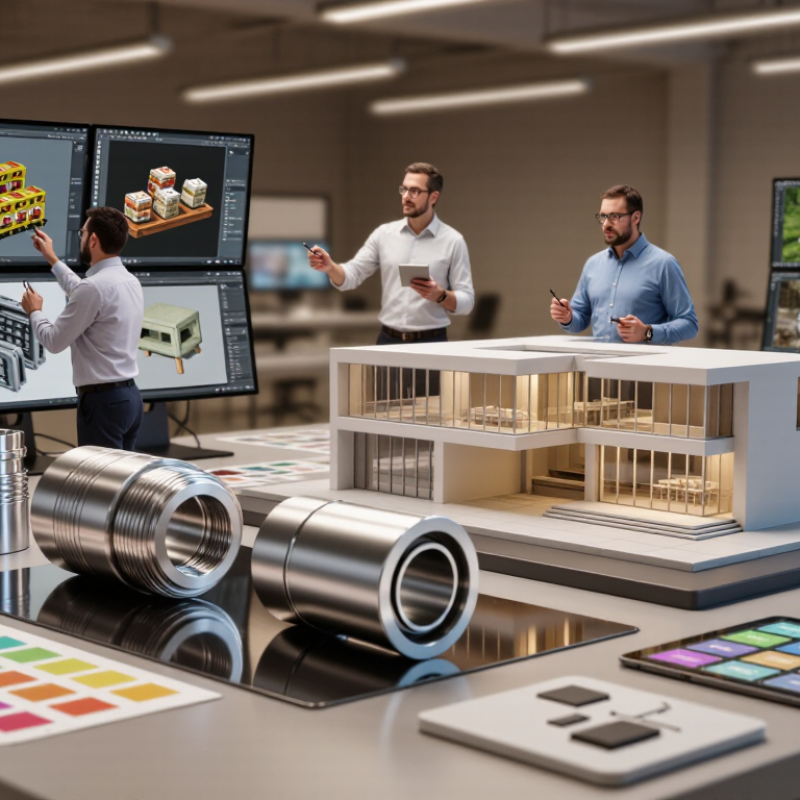
What Defines a 3D Rendering Demo Service
A credible 3D rendering demo service shows more than attractive images. It demonstrates how a team converts drawings, measurements, and material references into usable visual evidence. In practice, buyers should see several viewpoints, realistic lighting, close-ups, and revisions from the same project. A strong demo also explains its workflow, file handling, estimated timelines, and quality checks. That detail matters. Experienced providers do not hide difficult surfaces or unfinished areas. They show how problems are identified before final delivery, because visual accuracy begins with careful interpretation, not special effects.
For global buyers, reliability appears in small operational details. The service should confirm units, dimensions, regional design requirements, and communication expectations before modeling starts. Secure file transfer and controlled access are essential when plans contain private project information. Clear approval stages reduce expensive misunderstandings across time zones. No service is perfect. A demo becomes more trustworthy when it states its limits, such as uncertain textures, missing measurements, or lighting that cannot represent a finished space exactly. Honest boundaries are professional evidence, not weakness.
Expertise is also visible in revision discipline. A dependable team records requested changes, preserves approved elements, and supplies consistent outputs for websites, presentations, or technical review. Buyers can test this by requesting one modest adjustment and checking the response. Does the provider ask useful questions, or simply promise speed? My experience suggests the best demonstrations balance visual impact with traceable decisions. Sometimes the first version feels too clean. That deserves review. A realistic service leaves room for correction, documents assumptions, and treats every rendered detail as information that may influence a real purchase.
Key Features Global Buyers Should Evaluate
When comparing ten 3D rendering demo services, global buyers should test more than attractive screenshots. Visual fidelity matters, but measurable behavior matters more.
Rotate a product, switch daylight, and inspect edge shadows at 200% zoom. Check texture accuracy, camera controls, animation smoothness, and export formats such as glTF or USDZ.
Ask whether the demo supports localized units, currencies, languages, and region-based content. That detail often exposes weak implementation.
Baymard Institute’s large-scale checkout benchmark reports a 70.19% average cart-abandonment rate, making purchase friction impossible to ignore.
Test every demo on a mid-range phone over ordinary 4G. A widely cited mobile-performance study found that 53% of visits may leave when pages exceed three seconds.
Use Core Web Vitals as practical gates: LCP under 2.5 seconds, INP under 200 milliseconds, and CLS below 0.1. Measure loading with compressed and uncompressed assets. Then inspect keyboard navigation, captions, alternative text, and color contrast against WCAG 2.2 guidance.
Security deserves equal attention. Request encryption details, access controls, retention policies, and a clear incident process.
Pricing should show rendering minutes, storage, revisions, and support response times. I would not trust a polished showroom alone. One useful demo can still hide expensive workflow gaps.
Require a small, realistic pilot with your own files. That test is less glamorous, but more honest.
How the Top 10 Demo Services Compare
The top 10 3D rendering demo services differ less in appearance than in delivery control. A 2024 global market analysis valued the 3D rendering and visualization sector at about USD 5.36 billion in 2023. It also forecasts growth above 27% annually through 2030. This expansion gives buyers more choices, but comparison requires evidence. Examine sample scenes, lighting accuracy, material textures, and revision limits. Ask whether the service supports CAD, BIM, VR, and high-resolution product formats. Delivery time matters too. A realistic image arriving late may still damage a launch schedule. Compare response hours, time-zone coverage, file security, and correction policies before selecting a provider.
Tips: Request one identical test scene from several services. Measure the first draft, revision count, and final pixel quality. Keep the brief concrete. Include camera height, surface finish, lighting direction, and target audience.
Industry research on digital buying behavior reports that visual content strongly influences product understanding and purchase confidence. However, polished visuals can hide weak geometry or inaccurate scale. My experience reviewing visualization workflows suggests that speed often receives too much attention. A cheaper demo may require repeated corrections, increasing the real cost. The strongest services show process transparency, not only attractive galleries. Check portfolio dates, technical notes, and client-approved case evidence. Independent reviews can help, but they may reflect one project only. This is where the comparison becomes imperfect. Global buyers should score each service against their own risk, deadline, and communication needs.
Top 10 3D Rendering Demo Services for Global Buyers - How the Top 10 Demo Services Compare
| Rank | Demo Service Type | Primary Buyer Need | Typical Deliverables | Common Output Formats | Interactivity | Typical Turnaround | Revision Flexibility | Best Evaluation Criteria |
|---|---|---|---|---|---|---|---|---|
| 01 | Architectural Exterior Rendering | Presenting a building, site plan, or development before construction | Day and night still images, façade views, streetscape scenes | JPG, PNG, TIFF, PDF | Low; usually non-interactive images | 3–10 business days | Moderate to high | Lighting, materials, scale, landscaping, and camera accuracy |
| 02 | Interior Rendering | Testing layouts, finishes, furniture, and interior atmosphere | Room perspectives, material options, furniture arrangements | JPG, PNG, TIFF, PDF | Low; optional 360-degree views | 2–7 business days | High when design files are complete | Material realism, light behavior, proportions, and furniture detail |
| 03 | Product Rendering | Launching or marketing products without extensive photography | Packshots, lifestyle scenes, close-up detail views | JPG, PNG, TIFF, PSD | Low; optional 3D product viewer | 2–6 business days | High for color and configuration changes | Surface accuracy, color consistency, edge quality, and dimensions |
| 04 | 3D Walkthrough Animation | Explaining spatial flow, visitor experience, or project scale | Camera-path videos, fly-throughs, construction sequences | MP4, MOV, image sequences | Time-based visual navigation | 1–4 weeks | Moderate; changes may require re-rendering | Storyboarding, motion quality, pacing, resolution, and sound options |
| 05 | 360-Degree Virtual Tour | Allowing remote buyers to explore spaces from multiple viewpoints | Equirectangular panoramas, hotspots, room-to-room navigation | JPG, PNG, HTML5, WebGL-based viewer | High; user-controlled viewing direction | 1–3 weeks | Moderate | Navigation clarity, loading speed, panorama stitching, and mobile support |
| 06 | Real-Time 3D Configurator | Showing product options, finishes, sizes, or layouts interactively | Interactive model, option selectors, real-time previews | WebGL, HTML5, GLB, glTF | Very high; users change options directly | 3–8 weeks | High after the model system is established | Performance, option logic, model optimization, and device compatibility |
| 07 | Virtual Reality Demo | Immersive review of architecture, interiors, training, or retail spaces | VR-ready scenes, guided experiences, interactive navigation | OpenXR-compatible build, GLB, glTF, 360 video | Very high; head-tracked immersive environment | 3–8 weeks | Moderate | Frame rate, comfort, scale accuracy, interaction design, and hardware support |
| 08 | Augmented Reality Product Preview | Visualizing an object at real scale in a customer's environment | Mobile placement tool, scale controls, product variants | USDZ, GLB, glTF, mobile-ready assets | High; camera-based placement and scaling | 3–8 weeks | Moderate to high | Tracking stability, scale accuracy, file size, and operating-system coverage |
| 09 | CAD-to-Render Conversion | Turning engineering or manufacturing files into presentation-ready visuals | Cleaned 3D model, material setup, technical and marketing views | STEP, IGES, STL, OBJ, FBX, JPG, PNG | Low; can support later interactive use | 2–10 business days | High when source geometry is usable | Geometry fidelity, tolerances, missing surfaces, materials, and confidentiality controls |
| 10 | Aerial and Urban Context Rendering | Showing a project within its surrounding city, landscape, or infrastructure | Aerial stills, massing studies, site-context animations | JPG, PNG, TIFF, MP4, GIS-compatible references | Low to moderate | 5–15 business days | Moderate | Geographic accuracy, camera position, terrain, surrounding buildings, and privacy compliance |
Industry Applications and Buyer Requirements
Global buyers now assess 3D rendering services by application, not appearance alone. Architectural firms need accurate daylight, materials, and scale for client approvals. Product teams require clean geometry, exploded views, and multiple camera angles. Retail developers often request interactive walkthroughs before construction begins.
MarketsandMarkets estimated the 3D rendering and visualization market at about USD 3.7 billion in 2022, with strong growth projected through 2027. This expansion reflects wider demand across real estate, manufacturing, healthcare, and entertainment. Buyers should therefore ask for sector-specific portfolios, not generic image galleries. A medical visualization needs different accuracy standards from a furniture scene.
Details matter. Confirm output resolution, file formats, revision limits, delivery stages, and ownership rights before commissioning work. The 2024 Global Construction Survey reported continuing concerns about project delays and cost pressure, making reliable visual coordination increasingly valuable. A rendering that reveals a pipe conflict or incorrect door swing can save a costly revision. It may not.
The best demo services also explain their workflow. Ask whether they use measured drawings, CAD files, laser scans, or site photographs. Request a small test frame before approving a full batch. Some providers promise cinematic realism but overlook dimensions, accessibility, or regional building practices. That weakness deserves scrutiny. Data security, time-zone coverage, technical communication, and documented quality checks should influence selection as much as visual polish.
Steps for Selecting the Right Rendering Demo Service
Top 10 3D Rendering Demo Services for Global Buyers
Steps for Selecting the Right Rendering Demo Service
Choosing a rendering demo service requires more than admiring bright images. Start by defining your project needs, including product type, camera angles, file formats, and delivery dates. Request relevant samples, such as a kitchen scene with reflective glass or a machine shown in close detail. Check whether the team understands lighting, materials, scale, and realistic textures. Their portfolio should show consistent quality, not only one impressive image.
Ask how revisions, ownership rights, data protection, and international communication are handled. A reliable provider explains its workflow clearly, from reference review to final export. Request a small paid test when possible. It can reveal modeling accuracy, response speed, and attention to instructions. Still, one test cannot predict every future result. That limitation deserves honest consideration.
Tips: Compare three service proposals using the same brief. Check technical specifications, revision limits, estimated timelines, and communication hours. Confirm that final files match your software and marketing requirements. Read independent client feedback carefully, especially comments about missed deadlines or unclear pricing. A lower quote may seem attractive, but rushed lighting or inaccurate dimensions can create expensive corrections later. Keep a written approval record for every major change.
