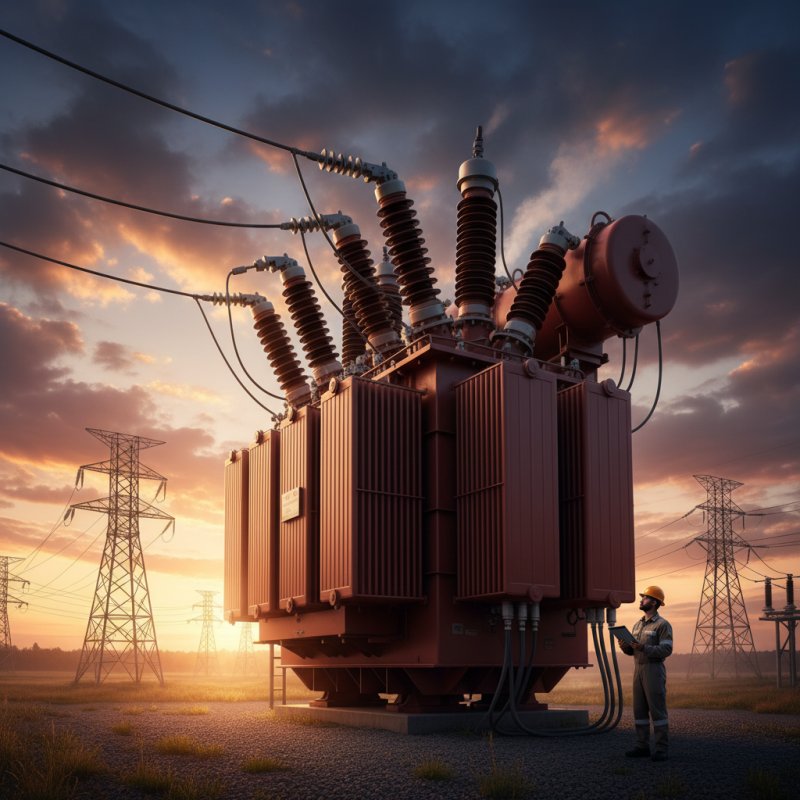
What is a Power Transformer and How Does It Work?
Power Transformers play a crucial role in electrical systems. They enable the efficient transmission of electricity across vast distances. An expert in the field, Dr. Emily Tran, once stated, “Power Transformers are the backbone of modern power distribution.” Her insight underscores their importance.
These devices adjust voltage levels to minimize energy loss. During transmission, high voltages are used to reduce current, which helps in decreasing resistive losses. However, the design and operation of Power Transformers are not without challenges. Factors such as temperature, load variations, and maintenance affect their efficiency.
In many cases, organizations overlook the need for regular checks. This negligence can lead to unexpected failures. Understanding the workings of Power Transformers is vital for engineers and technicians. Awareness can help prevent costly disruptions in power supply and ensure that energy flows consistently.
What is a Power Transformer?
Power transformers are essential components in electrical power systems. They facilitate the transmission of electricity between different voltage levels. This ensures efficient energy distribution from power generation sites to consumers. According to the International Energy Agency, the global demand for electricity is projected to rise by 2.1% annually until 2040. As electricity consumption increases, the role of power transformers becomes even more significant.
A power transformer typically operates on the principle of electromagnetic induction. It consists of primary and secondary windings, which transform voltage levels. This process minimizes energy losses during transmission. The efficiency of modern transformers can reach up to 99%. However, conventional transformers can still experience issues like overheating and vibration. Addressing these challenges is vital for enhancing reliability.
In 2020, the global power transformer market was valued at approximately $30 billion. Factors like urbanization and industrial growth contribute to this trend. Despite these advancements, many transformers still face outdated designs and materials. This indicates the ongoing need for innovation, which can improve performance and reduce energy waste. The evolution of power transformers is crucial in meeting future energy demands.
Power Transformer Efficiency by Voltage Level
This chart illustrates the efficiency of power transformers at different voltage levels. Generally, the higher the voltage level, the greater the efficiency, with extra high voltage transformers achieving up to 99% efficiency.
Basic Components of a Power Transformer
Power transformers are essential in electricity distribution, stepping up or stepping down voltage levels. Understanding their basic components is crucial for appreciating their functionality. The main parts include the core, windings, and insulation. The core is typically made of laminated silicon steel, vital for minimizing energy losses. According to industry reports, up to 98% efficiency can be achieved in modern transformers with optimal core design.
Windings, made of copper or aluminum, are another critical element. They create magnetic fields necessary for transforming voltage. The number of turns in each winding directly affects the voltage levels. Insulation materials, often made from oil or paper, protect windings from electrical faults. Insulation must withstand high temperatures and voltages, leading to the consideration of long-term reliability.
In focus, power transformers face challenges like heat management and aging insulation. Regular maintenance is essential but often overlooked. Over time, moisture can degrade insulating materials, leading issues. Addressing these challenges requires a thorough understanding of transformer design and operation. The industry calls for ongoing research into more durable materials and efficient designs to improve lifespan and reduce energy loss.
How Power Transformers Operate: The Working Principle
Power transformers play a crucial role in electrical power distribution. They adjust voltage levels in the transmission of electricity. Their primary function is to step up or step down voltage as needed. Most power transformers operate using electromagnetic induction. This principle allows alternating current to induce a magnetic field.
When electricity flows through the primary winding, it creates a magnetic field around it. This magnetic field then induces voltage in the secondary winding. The winding turns ratio determines whether the voltage is stepped up or down. According to industry reports, a well-designed transformer can achieve efficiency rates above 98%. This high efficiency results in minimal energy losses during power transmission.
However, power transformers are not without challenges. They require regular maintenance to ensure optimal performance. Aging insulation can lead to failures if not monitored. When transformers operate close to their limits, overheating can occur. Effective cooling systems are vital in maintaining performance. The design should account for environmental factors and load variations. Understanding these operational details can help mitigate risks and enhance reliability.
What is a Power Transformer and How Does It Work?
| Parameter | Description | Value |
| Primary Voltage | Input electric voltage | 11 kV |
| Secondary Voltage | Output electric voltage | 400 V |
| Power Rating | Maximum load the transformer can handle | 1000 kVA |
| Efficiency | Ratio of output power to input power | 98% |
| Frequency | Operating frequency of the transformer | 50 Hz |
| Cooling Type | Method used to dissipate heat | Oil-immersed |
Different Types of Power Transformers and Their Applications
Power transformers play a crucial role in electrical power distribution. They come in various types, each with specific applications. One common type is the step-up transformer, which increases voltage levels for long-distance transmission. This helps reduce energy loss during transport. These transformers are typically found in power plants, where voltage levels must be elevated before distribution.
Another important type is the step-down transformer, which decreases voltage for safe local use. This kind is commonly used in substations and residential areas. Their design is straightforward, yet their efficiency is paramount. Faulty step-down transformers can lead to voltage fluctuations and unreliable power supply.
Autotransformers are also noteworthy. They use a single winding to perform both step-up and step-down functions, providing efficient voltage conversion in certain conditions. However, these transformers may lack galvanic isolation, which can be a drawback in sensitive applications.
Understanding these variations is essential for effective power management. Each type has strengths and weaknesses, highlighting the importance of careful selection in specific contexts.
Importance of Power Transformers in Electrical Distribution Systems
Power transformers play a crucial role in electrical distribution systems. They help to adjust voltage levels for efficient electricity transmission. Without them, power loss would be significant, especially over long distances.
One key function of power transformers is voltage transformation. They step up the voltage for long-distance transmission, reducing current. This process minimizes energy loss as heat. In urban areas, transformers then step down the voltage to safer levels for residential and commercial use.
However, their importance extends beyond efficiency. Transformers also enhance system reliability. They can manage fluctuations in electrical demand. This ability helps maintain a steady power supply, preventing outages. Yet, aging infrastructure raises concerns. Regular maintenance is critical to ensure reliability. Failure to address issues can lead to unexpected failures. Understanding these nuances is essential for anyone involved in electrical engineering.