
Blog
How to Source Freeze Dried Candy in Bulk?
Sourcing Freeze Dried Candy in bulk requires more than comparing online prices. The product’s crisp texture depends on moisture control, processing quality, and suitable packaging. Grand View Research identifies freeze-dried food as a growing market, supported by demand for longer shelf life and convenient snacks. Mordor Intelligence also reports expanding interest in processed fruit and confectionery products. These reports show opportunity, but they do not guarantee a reliable supplier.
Food scientist Kantha Shelke, PhD, explains the central principle this way: “Freeze-drying removes moisture while preserving the food’s original structure, flavor, and nutrients.” That principle matters when evaluating candy manufacturers. Ask for water activity results, ingredient specifications, batch records, and recent certificates of analysis. A supplier should explain its freeze-drying temperature, cycle time, packaging barrier, and storage conditions. Clear answers build confidence.
Small details reveal much. Open a sample pouch. Listen for the sharp crunch. Check whether pieces feel sticky after several minutes in room air. Review the minimum order quantity, private-label options, production lead time, and replacement policy before signing. Food safety certifications, allergen controls, traceability, and hygienic production areas also deserve verification. A low quote can still become expensive after damaged cartons or inconsistent batches. I would not trust market forecasts alone. They describe demand, not your supplier’s performance. Start with a pilot order, compare two or three factories, and document every result. That imperfect step may prevent a costly bulk purchase.
Define Your Bulk Freeze-Dried Candy Requirements
How to Source Freeze Dried Candy in Bulk?
Define Your Bulk Freeze-Dried Candy Requirements
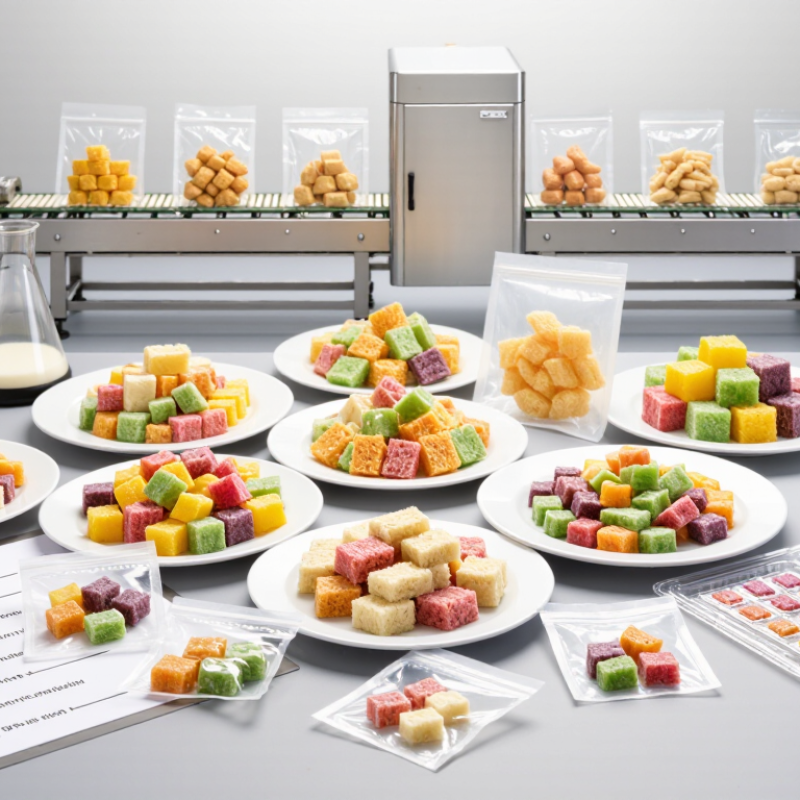
Before contacting suppliers, define the product your business actually needs. Record the candy type, flavors, shapes, colors, and coating preferences. Specify whether you need fruit pieces, chewy sweets, or mixed varieties. Small details affect pricing, production time, and packaging.
Set a realistic order quantity and target price per kilogram. Include your preferred bag size, carton count, and private-label requirements if applicable. Moisture protection is essential because freeze-dried candy can soften quickly after exposure to air. Ask for packaging samples, not only product photos. Photos can hide broken pieces.
My first bulk estimate was too optimistic. I overlooked storage space and damaged units during transport. A better plan includes a breakage allowance and clear delivery terms. Request samples from the same production process used for larger orders. Compare texture, flavor strength, color consistency, and piece size.
Reliable sourcing also requires documented quality checks. Ask for ingredient lists, allergen information, shelf-life data, and batch identification. Confirm whether the supplier can provide relevant food-safety records and testing documents. Check how products are sealed, stored, and shipped. A sample may taste excellent but fail after several weeks in a warm warehouse. Review the results with your sales team, then revise the specification before placing a deposit. Requirements should be practical, measurable, and easy to inspect.
How to Source Freeze Dried Candy in Bulk? - Define Your Bulk Freeze-Dried Candy Requirements
| Requirement Dimension | Recommended Bulk Specification | Practical Acceptance Criteria | Why It Matters |
|---|---|---|---|
| Candy Type | Gummy candy, marshmallow, fruit pieces, chocolate-coated candy, or other approved confectionery | Product identity, ingredient list, allergen statement, and approved sample match the purchase order | Different candy structures react differently to freezing, drying, humidity, and handling. |
| Target Order Quantity | Define the initial order in kilograms or cases and provide an estimated monthly or quarterly volume | Supplier confirms available production capacity, minimum order quantity, and shipment quantity | Volume affects unit cost, production scheduling, packaging configuration, and freight efficiency. |
| Piece Size and Weight | Specify target dimensions, pieces per kilogram, and acceptable weight tolerance | Use a documented tolerance, such as ±10% for individual pieces and a defined average weight for each lot | Size consistency supports accurate labeling, portion control, and predictable retail presentation. |
| Texture and Appearance | Light, crisp, expanded, and dry texture with the agreed color and shape | No excessive collapse, burning, wet spots, severe sticking, mold, foreign material, or unexplained discoloration | Sensory quality is one of the main reasons consumers purchase freeze-dried candy. |
| Moisture Content | Set a product-specific maximum, commonly around 2% to 5% for dry freeze-dried confectionery | Every production lot is tested using a documented method, with results recorded on the certificate of analysis | Low moisture helps preserve crispness, reduce clumping, and slow quality deterioration. |
| Water Activity (aw) | Target aw below 0.60; a lower limit may be selected for products requiring extended crispness | Test each lot with a calibrated water-activity meter and define the release limit in the specification | Water activity is more useful than moisture alone for evaluating microbial growth potential and texture stability. |
| Ingredients and Allergens | Provide the complete formula, sub-ingredients, allergens, additives, and dietary claims required for the destination market | Ingredient declaration and allergen controls comply with the applicable food regulations in the sales market | Formulation affects compliance, consumer suitability, labeling, and import clearance. |
| Packaging Format | Bulk food-grade inner bag placed inside a sealed, durable outer carton or case | Packaging is intact, heat-sealed or securely closed, clean, food-contact compliant, and suitable for dry products | Freeze-dried candy rapidly absorbs moisture when exposed to humid air. |
| Moisture and Oxygen Barrier | Use packaging with an appropriate moisture barrier; consider oxygen control for oxygen-sensitive ingredients | Packaging performance is supported by specifications or supplier documentation, and seals pass visual inspection | Barrier performance helps maintain texture, color, flavor, and shelf life during storage and transport. |
| Shelf Life | Request a documented shelf-life period, commonly 6 to 12 months when unopened and properly packaged | Remaining shelf life at delivery is agreed in advance, such as at least 75% of the stated shelf life | Shelf-life requirements influence inventory planning, freight timing, and retail distribution. |
| Lot Coding and Traceability | Each case and inner package should show a lot or batch code, production date, and best-before date where required | Supplier can trace ingredients, processing records, packaging materials, and shipment records to the lot code | Traceability supports recalls, complaint investigation, stock rotation, and regulatory compliance. |
| Food Safety Controls | Supplier should operate documented sanitation, hazard-control, allergen, foreign-material, and pest-control procedures | Review current food-safety documentation, audit information, and product testing records before approval | Preventive controls reduce contamination risks and support customer and regulatory requirements. |
| Case Pack and Logistics | Define net weight per case, case dimensions, gross weight, pallet pattern, stacking limits, and shipping temperature requirements | Cases arrive dry, clean, undamaged, correctly labeled, and suitable for warehouse handling | Accurate logistics data improves freight quotations, warehouse planning, and damage prevention. |
| Sampling and Approval | Approve a representative pre-production or production sample before placing the full bulk order | Compare taste, texture, appearance, dimensions, packaging, and test results against the approved reference sample | A written sample standard reduces disputes between purchase, production, and receiving teams. |
| Required Documents | Product specification, ingredient and allergen statement, certificate of analysis, packing list, invoice, and transport documents | Documents are complete, consistent with the shipment, and available before or at delivery as agreed | Correct documentation supports receiving inspection, customs processing, and product release. |