
Blog
How to Choose the Right Anchor Bolt for Your Project?
Choosing the right Anchor Bolt is not a matter of selecting the largest diameter or highest strength. It requires a clear understanding of the structure, the base material, and the forces involved. A small equipment frame may need different protection than a coastal steel platform. Concrete strength, embedment depth, edge distance, tension, shear, vibration, and corrosion exposure all influence the final choice.
Dr. John G. Bickford, a respected authority on bolted-joint engineering, offered a useful reminder: “The bolt is only one component of a bolted joint.” That principle remains practical today. An Anchor Bolt can be strong, yet fail when the concrete cracks, the hole is poorly cleaned, or installation torque is ignored. Details matter.
This guide examines common anchor types, including wedge anchors, sleeve anchors, cast-in bolts, and chemical anchors. It also considers load tables, installation conditions, coating systems, and project documentation. A bolt beside a dusty hole tells only half the story. The surrounding concrete tells the rest.
Real projects are rarely perfect. Drawings may omit edge distances. Site conditions may differ from laboratory assumptions. Sometimes, the initial selection must be questioned. That is not weakness. It is responsible engineering.
The goal is not simply to find an Anchor Bolt that fits. The goal is to choose a tested, compatible, and installable solution that performs reliably over time. Always confirm manufacturer data and project-specific calculations before approval. Properties vary. Mistakes can become expensive.
Understand Anchor Bolt Types and Their Applications
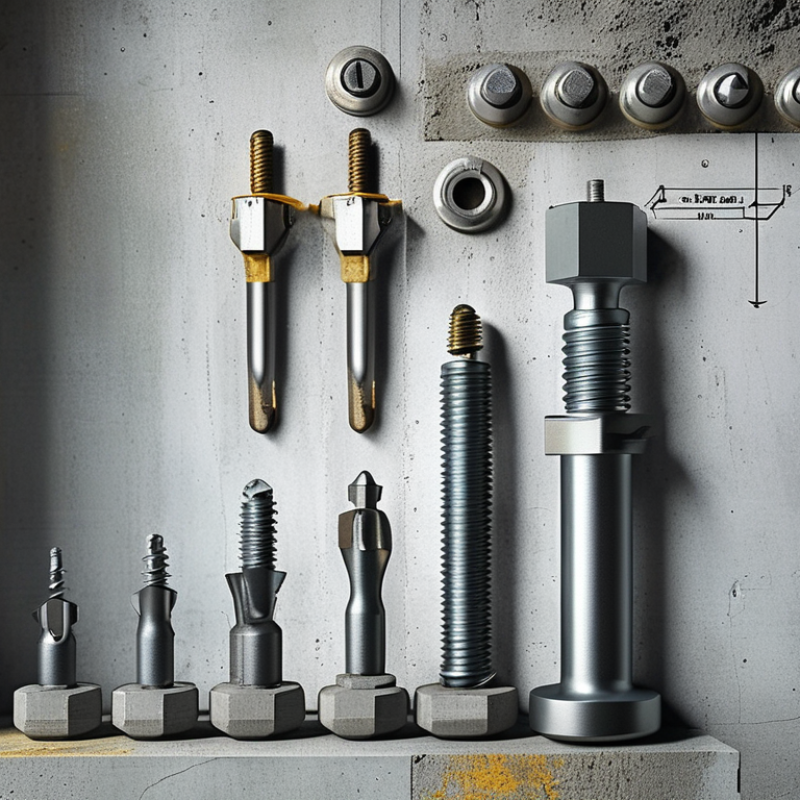
Choosing an anchor bolt starts with the connection, not the bolt diameter. Cast-in-place anchors suit new concrete and heavy equipment bases. Their embedded length transfers tension into the foundation. Post-installed expansion anchors work well in sound concrete, while adhesive anchors suit cracked concrete and close edge distances.
ASTM F1554 defines three anchor-rod strength grades: 36, 55, and 105. The number indicates minimum yield strength in ksi. Higher strength is not automatically safer. A stronger rod can overload weak concrete. ACI 318-19 Chapter 17 checks steel tension, concrete breakout, pullout, and shear. Each failure mode matters. For seismic or vibrating equipment, engineers should verify ductility, embedment depth, and installation torque. Field experience shows that dirty holes and poor curing often reduce real capacity. This is easy to underestimate.
Tips: Match the bolt type to the base material, load direction, edge distance, and environment. Record hole diameter, drilling method, torque, and adhesive batch. ASTM F1554 grade markings should remain visible when practical. The American Institute of Steel Construction’s AISC 360-22 provisions also require connection design to consider combined forces, not tension alone. Recheck the design when equipment weight changes. Small changes can matter. I would also question any selection based only on a supplier table; those values may assume ideal concrete, perfect installation, and no sustained load.
How to Choose the Right Anchor Bolt for Your Project? - Understand Anchor Bolt Types and Their Applications
| Anchor Bolt Type | Typical Installation | Suitable Base Material | Common Applications | Main Load Characteristics | Key Selection Considerations |
|---|---|---|---|---|---|
| L- or J-Shaped Cast-In Anchor Bolt | Positioned in fresh concrete before it hardens; the bent end provides mechanical anchorage. | New concrete foundations and slabs. | Equipment bases, steel columns, sign structures, and light poles. | Reliable tension and shear resistance when sufficient embedment and edge distance are provided. | Bolt diameter, embedment depth, bend geometry, projection length, reinforcement layout, and accurate positioning. |
| Headed Cast-In Anchor Bolt | Installed in fresh concrete with a forged or welded head embedded in the concrete. | New structural concrete. | Heavy machinery, base plates, structural steel connections, and precast elements. | Good resistance to tension through head bearing and to shear through the embedded shaft and surrounding concrete. | Head diameter, embedment depth, concrete strength, edge distance, spacing, and design code requirements. |
| Expansion Wedge Anchor | Inserted into a drilled hole; tightening expands a wedge against the hole wall. | Sound, uncracked or cracked concrete, subject to the product's approval. | Guardrails, machinery supports, structural brackets, and retrofit attachments. | High immediate clamping force with effective tension and shear performance when installed correctly. | Concrete condition, hole diameter and depth, minimum spacing, edge distance, torque, and suitability for cracked concrete. |
| Sleeve Anchor | A sleeve expands against the sides of a drilled hole as the nut is tightened. | Concrete, solid brick, and some dense masonry applications. | Light- to medium-duty fixtures, handrails, shelving, and equipment supports. | Moderate tension and shear capacity; performance depends strongly on base-material quality. | Base-material strength, sleeve length, fixture thickness, hole cleanliness, spacing, and edge distance. |
| Drop-In Internal-Thread Anchor | Set inside a drilled hole using a setting tool; an internal thread accepts a machine screw or threaded rod. | Concrete, generally for applications approved by the anchor manufacturer or design standard. | Suspended services, cable trays, pipe supports, and removable fixtures. | Primarily suited to static tension loads; shear resistance depends on the fixture and anchor design. | Correct setting depth, hole cleaning, concrete condition, thread engagement, and allowable load under the applicable code. |
| Concrete Screw Anchor | Threaded directly into a properly drilled pilot hole in hardened concrete or masonry. | Concrete and approved masonry substrates. | Light- to medium-duty brackets, electrical fixtures, framing, and temporary attachments. | Convenient installation with moderate tension and shear performance; not automatically suitable for high sustained loads. | Pilot-hole size, screw diameter, embedment, substrate condition, installation torque, and approval for cracked concrete or seismic use. |
| Adhesive or Chemical Anchor | Resin is injected into a cleaned hole, followed by insertion of threaded rod or a reinforcing bar. | Concrete, and selected masonry substrates when specifically approved. | Heavy equipment, structural retrofits, close-to-edge installations, and post-installed reinforcement. | Can provide high tension capacity and reduced expansion forces, but strength depends on bond, temperature, and curing. | Resin qualification, hole cleaning, embedment, installation temperature, cure time, moisture condition, and inspection requirements. |
| Bent-Plate or Plate Anchor | A threaded rod or bolt is welded to a plate or fabricated shape and cast into concrete. | New concrete foundations and heavily reinforced concrete elements. | Heavy structural columns, industrial frames, towers, and custom foundation connections. | High load potential through plate bearing and reinforcement interaction when designed as part of the connection. | Plate size, weld design, steel grade, embedment, reinforcement congestion, load path, and fabrication tolerances. |