
skip to Main Content

Top Thermal Insulation Boards for Global Buyers

Global buyers are rethinking building envelopes as energy costs, climate risks, and stricter codes reshape construction decisions. The stakes are high. UNEP’s Global Status Report for Buildings and Construction 2023 states that buildings consumed about 34% of global energy and produced approximately 37% of energy- and process-related carbon emissions in 2021. The International Energy Agency also identifies building efficiency as a major pathway for reducing energy demand.

Thermal Insulation Boards can reduce heat transfer across walls, roofs, floors, and cold-storage panels. However, performance depends on more than the advertised R-value. Board thickness, thermal conductivity, moisture resistance, fire classification, joint detailing, and installation quality all matter. Small gaps matter. A poorly fitted board can create thermal bridges around windows, fasteners, and service penetrations.

Dr. Joseph Lstiburek, a respected building-science expert, states, “A building is a system.” This principle is essential when comparing expanded polystyrene, extruded polystyrene, polyurethane, polyisocyanurate, mineral wool, and wood-fibre boards. Each material performs differently under humidity, temperature variation, pressure, and local construction practices. The best choice is rarely universal.

For global procurement teams, dependable evaluation should combine laboratory data, regional standards, verified environmental declarations, and practical installation evidence. Reports from UNEP and the IEA provide the wider energy context, while product certifications help confirm specific claims. Still, certification alone cannot guarantee field performance. That assumption fails.

This guide examines leading Thermal Insulation Boards for international buyers, including their strengths, limitations, applications, and purchasing risks. We may still overlook regional workmanship differences. That is worth acknowledging. Reliable insulation decisions require technical evidence, transparent suppliers, and careful attention to the building’s complete envelope.
Top Thermal Insulation Boards for Global Buyers

Thermal Insulation Boards: Definition and Core Functions

Top Thermal Insulation Boards for Global Buyers

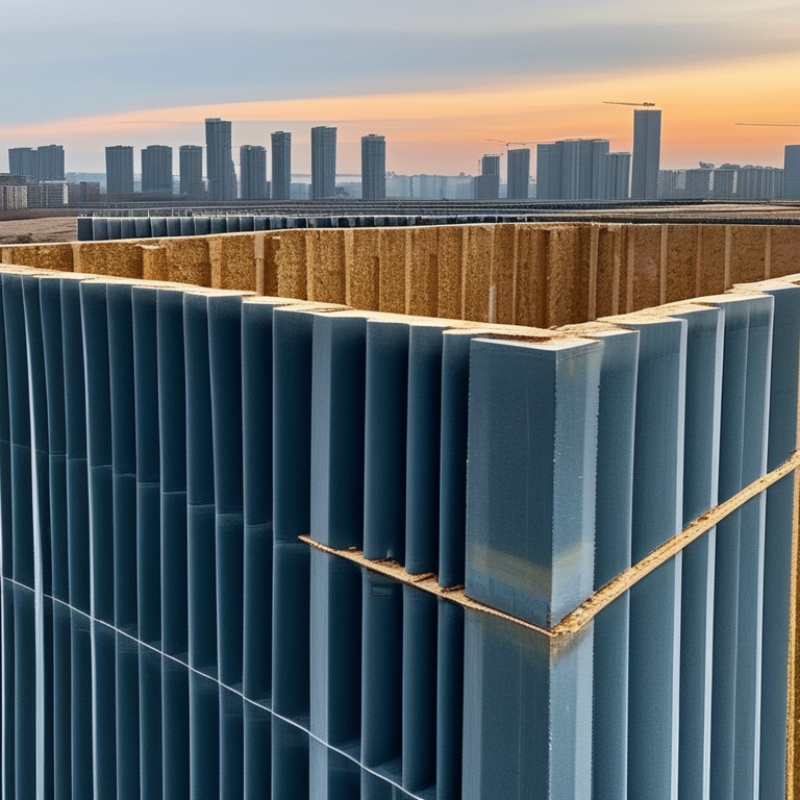
Thermal insulation boards are rigid panels designed to slow heat transfer through walls, roofs, floors, and foundations. They create a stable thermal barrier between indoor spaces and changing outdoor temperatures. Common board types include mineral fiber, rigid foam, and natural-fiber products. Each offers different levels of thermal resistance, moisture control, fire performance, and mechanical strength.

Their core function is energy management. In cold climates, boards help retain indoor warmth. In hot climates, they reduce unwanted heat entering buildings. Good insulation can also limit surface condensation and improve indoor comfort. However, performance depends on more than the board itself. Gaps, compressed edges, wet surfaces, and poorly sealed joints can reduce real-world effectiveness. Field inspections often reveal this problem. The specification may look excellent, yet installation remains imperfect.

Tips: Check the declared thermal conductivity, thickness, density, and moisture resistance before purchasing. Match the board to the building location and local climate. Confirm fire classifications and installation requirements with qualified professionals. Protect boards from prolonged rain during storage. Even a strong product can fail when exposed to water or careless cutting. Reflect on the full wall system, not only the insulation panel. Air barriers, vapor control, fasteners, and joint sealing also influence long-term results.

Key Material Types and Their Thermal Performance

Top Thermal Insulation Boards for Global Buyers

Key Material Types and Their Thermal Performance

Thermal insulation boards differ sharply in conductivity, moisture tolerance, and fire behaviour. Expanded polystyrene commonly records 0.031–0.040 W/m·K, while extruded polystyrene often reaches 0.029–0.036 W/m·K. Polyisocyanurate can achieve approximately 0.022–0.028 W/m·K, allowing thinner wall assemblies. Mineral wool boards usually sit near 0.034–0.040 W/m·K. These ranges are indicative, not guaranteed. Density, facing layers, temperature, and installation quality can change results.

Moisture matters greatly.

For below-grade applications, closed-cell boards can resist water absorption better, but joints still require careful sealing. Mineral wool offers strong fire resistance and acoustic absorption, although it may need protection from persistent moisture. EN 13162 through EN 13171 provide product classification frameworks, while declared thermal values should be checked under relevant testing conditions. Buyers should request third-party test results, technical datasheets, and environmental product declarations rather than relying on headline lambda figures.

The International Energy Agency reported that buildings accounted for about 30% of global final energy consumption in 2022. Better insulation can reduce heating and cooling demand, but thicker is not always better. A 2023 UNEP buildings report also highlights the sector’s substantial emissions impact, making embodied carbon worth reviewing. Recycled content, transport distance, blowing agents, and service life deserve equal attention. One practical weakness remains: laboratory performance rarely matches a poorly fitted board. Site supervision is part of thermal performance.

How to Compare Boards for Different Building Applications

Choosing thermal insulation boards starts with the building application, not the lowest advertised lambda value. The International Energy Agency reports that buildings consume about 30% of global final energy and create roughly 26% of energy-related emissions. Better insulation can reduce demand, but only when the board suits the assembly.

For external walls, compare thermal conductivity, water absorption, vapour resistance, and fire performance. Mineral wool boards offer strong fire resistance and acoustic control, while rigid polymer boards usually provide more insulation per millimetre. In roofs, compressive strength matters because maintenance loads can deform weak products. For floors, check long-term compression and moisture exposure, especially above slabs or in basements. ASTM C518 and EN 12667 provide recognized methods for measuring thermal performance, but laboratory values may not match installed results.

Details matter most.

The International Energy Agency’s Buildings report warns that efficiency gains depend on construction quality and proper installation. Gaps around window edges, compressed corners, and poorly sealed joints can create thermal bridges. Site inspections frequently find these defects, even where the selected board has excellent test data. A low lambda value is not enough. Buyers should request declared performance, thickness tolerances, fire classification, density, and moisture data. Environmental Product Declarations can also support carbon comparisons, although their boundaries differ. This makes direct product ranking imperfect. Regional climate, wall design, labour quality, and local regulations can change the practical choice.

Global Standards, Certifications, and Regulatory Requirements

Top Thermal Insulation Boards for Global Buyers

For global buyers, thermal performance is only one part of a reliable insulation board. Check the product standard for its material type. European markets commonly use EN 13162 for mineral wool, EN 13163 for EPS, EN 13164 for XPS, and EN 13165 for polyurethane boards. These standards address declared thermal conductivity, dimensions, density, and durability. Fire performance may follow EN 13501-1, while other markets often require ASTM test methods.

Certification documents must match the shipment and intended application. Look for a Declaration of Performance, factory production-control records, accredited laboratory reports, and a current Safety Data Sheet. CE or UKCA marking may apply in specific markets, but neither replaces project approval. Buyers should also verify local rules for fire resistance, moisture exposure, emissions, recycling, and installation thickness. A declared lambda value can change with temperature and aging. That detail is easy to overlook.

Tips: Request test reports before ordering samples. Compare declared R-values at the same temperature. Confirm whether values describe the board alone or the complete wall system. Ask for batch traceability and storage instructions. In practice, a neat certificate pack may still hide gaps. I have seen projects delayed because the fire classification covered one thickness, but the purchased board used another. Recheck every document against the actual product code. Local building officials should review final compliance.

Sourcing, Installation, and Long-Term Performance Considerations

Top Thermal Insulation Boards for Global Buyers

Sourcing, Installation, and Long-Term Performance Considerations

For global buyers, insulation board selection starts with climate, wall assembly, and verified performance—not a glossy product sheet. Request data for thermal conductivity, compressive strength, water absorption, fire behavior, and dimensional stability. Ask for test methods and dates. A low declared conductivity can mislead when moisture or installation gaps are ignored. Confirm export packaging, storage limits, pallet protection, and replacement procedures before placing a large order. Samples should represent production batches, not only showroom pieces.

During installation, measure substrate flatness with a two-metre straightedge. Dust, uneven joints, and poorly fitted corners create thermal bridges that drawings rarely show. Cut boards tightly, stagger joints, and seal penetrations around pipes, windows, and fasteners. Keep materials dry, elevated, and covered, while allowing ventilation. Wet boards may look acceptable after drying, yet their edges can warp or lose strength. On-site experience often shows that rushed schedules create expensive repairs later.

Long-term performance depends on compatible membranes, fixings, adhesives, and exterior finishes. Check movement, freeze-thaw exposure, ultraviolet protection, and pest resistance where relevant. Record batch numbers, installation temperatures, moisture readings, and photographs before concealment. A commissioning inspection after severe weather can reveal loosened edges or trapped moisture. Perfect detailing is an optimistic assumption. Use qualified local professionals familiar with applicable building requirements, and review the assembly after one year.

Top Thermal Insulation Boards for Global Buyers - Sourcing, Installation, and Long-Term Performance Considerations

Board Type Typical Thermal Conductivity
(λ, W/m·K)
Typical Density
(kg/m³)
Approx. Thickness for
R = 5 m²·K/W
Moisture Performance Fire Performance Best-Fit Applications Key Sourcing Considerations Long-Term Performance Notes
Expanded Polystyrene (EPS) 0.031–0.040 15–30 155–200 mm Low water absorption when correctly detailed; exposed edges require protection. Combustible; classification depends on density, facings, thickness, and system design. External wall insulation, cavity walls, floors, roofs, and below-grade systems. Check bead type, declared λ value, dimensional tolerances, compressive strength, and recycled content. Stable in dry conditions; protect from solvents, prolonged UV exposure, fire, and excessive compression.
Extruded Polystyrene (XPS) 0.029–0.036 28–45 145–180 mm Low water absorption and good resistance to freeze–thaw exposure. Combustible; must be incorporated into an approved protective build-up. Inverted roofs, foundations, basement walls, floor slabs, and high-load areas. Verify compressive strength, creep data, edge profile, surface compatibility, and blowing-agent requirements. Good moisture and load resistance; avoid prolonged exposure to heat, UV, and incompatible solvents.
Polyisocyanurate (PIR) 0.022–0.028 30–40 110–140 mm Closed-cell core provides generally low water uptake; joints and facings must be sealed. Fire behavior varies significantly by facing and assembly; use tested system data. Pitched roofs, flat roofs, wall cavities, façades, floors, and space-constrained retrofits. Request declared λ, aged thermal values, facing type, fire-test reports, and compatibility with adhesives. High insulation efficiency per millimeter; thermal performance should be assessed using aged values.
Phenolic Foam 0.018–0.025 35–45 90–125 mm Low water absorption in service when joints and facings remain intact. Often favorable smoke and flame properties, but classification is product- and system-specific. Thin wall, roof, floor, and service-space applications where thickness is restricted. Confirm brittleness, edge quality, cutting losses, certification, and local availability before ordering. Excellent thermal efficiency; protect cut edges and avoid installation damage that can create thermal bridges.
Mineral Wool Board 0.034–0.041 70–180 170–205 mm Vapor-permeable; water-repellent treatments are common, but the board should not remain saturated. Non-combustible grades are widely available; verify the complete assembly classification. Fire-rated façades, rainscreen walls, partitions, roofs, and acoustic applications. Check density, orientation, water-repellency, tensile strength, thickness tolerance, and packaging volume. Strong fire and acoustic performance; maintain weather protection and prevent settlement or compression.
Wood-Fiber Board 0.038–0.050 110–270 190–250 mm Hygroscopic and vapor-open; requires careful moisture design and weather detailing. Combustible; fire performance depends on density, treatment, thickness, and protective layers. Breathable timber-frame walls, roofs, retrofit façades, and summer-overheating control. Assess moisture content, formaldehyde or binder data, pallet protection, and regional certification. Can provide useful thermal mass and humidity buffering; sustained wetting may reduce strength and insulation value.
Cellular Glass Board 0.038–0.050 100–180 190–250 mm Vapor-tight, non-absorbent, and resistant to water, pests, and many chemicals. Non-combustible mineral material with strong dimensional stability. Flat roofs, foundations, tank bases, cold environments, and chemically demanding areas. Confirm adhesive requirements, board tolerances, breakage allowance, pallet weight, and freight cost. Highly durable and resistant to moisture; brittle boards require careful handling and accurate substrate preparation.
Aerogel Composite Board 0.013–0.020 120–200 65–100 mm Usually protected by a composite facing; installation must prevent water ingress and fiber damage. Fire behavior varies by aerogel formulation, facer, and mounting system; obtain project-specific test evidence. Heritage renovation, façade reveals, window surrounds, pipe areas, and severely space-limited retrofits. Check minimum order quantity, lead time, cutting method, health-and-safety documentation, and delivered cost per R-value. Very high insulation performance per thickness; protect the composite envelope and avoid crushing during installation.
Technical note: Values are indicative ranges for commonly available insulation boards and may vary by product formulation, thickness, facing, test method, temperature, moisture condition, and regional standard. The approximate thickness is calculated as thickness ≈ λ × 5 and does not replace a project-specific U-value calculation. Confirm declared performance, fire classification, compressive strength, vapor behavior, installation instructions, and local code compliance before procurement.