
skip to Main Content

What Is the Best RS422 to Ethernet Converter in 2026?

Choosing the best Rs422 To Ethernet converter in 2026 requires more than comparing prices or port counts. RS-422 devices often operate in demanding environments, including factory floors, control cabinets, laboratories, and remote monitoring stations. A reliable converter must preserve serial data accurately while moving it across modern Ethernet networks. That sounds simple. It is not.

This guide examines practical selection criteria from an engineering and installation perspective. We consider baud-rate support, two-wire and four-wire wiring, electrical isolation, surge protection, connector quality, network protocols, configuration software, and long-term vendor support. A converter with a metal enclosure may handle heat better, while one with reinforced isolation can reduce ground-loop risks near motors and variable-frequency drives. Testing matters too. A device that works on a short bench cable may behave differently beside noisy industrial equipment.

Real-world experience also reveals uncomfortable details. The highest-priced model is not always the most dependable choice. Budget units may perform well, but unclear documentation can create hours of troubleshooting. Firmware updates, replacement availability, and transparent specifications often matter more than impressive marketing claims. Some products advertise broad compatibility without explaining latency under heavy network traffic. That gap deserves attention.

The sections ahead compare leading converter types and explain where each design fits. We will also discuss installation mistakes, diagnostic steps, and features worth paying for in 2026. No single model suits every system. Your cable length, network architecture, environmental conditions, and maintenance skills should guide the final decision. A careful evaluation can protect data integrity, reduce downtime, and make an older RS-422 system easier to manage.
What Is the Best RS422 to Ethernet Converter in 2026?

RS422 to Ethernet Converters: Definition, Purpose, and Core Functions

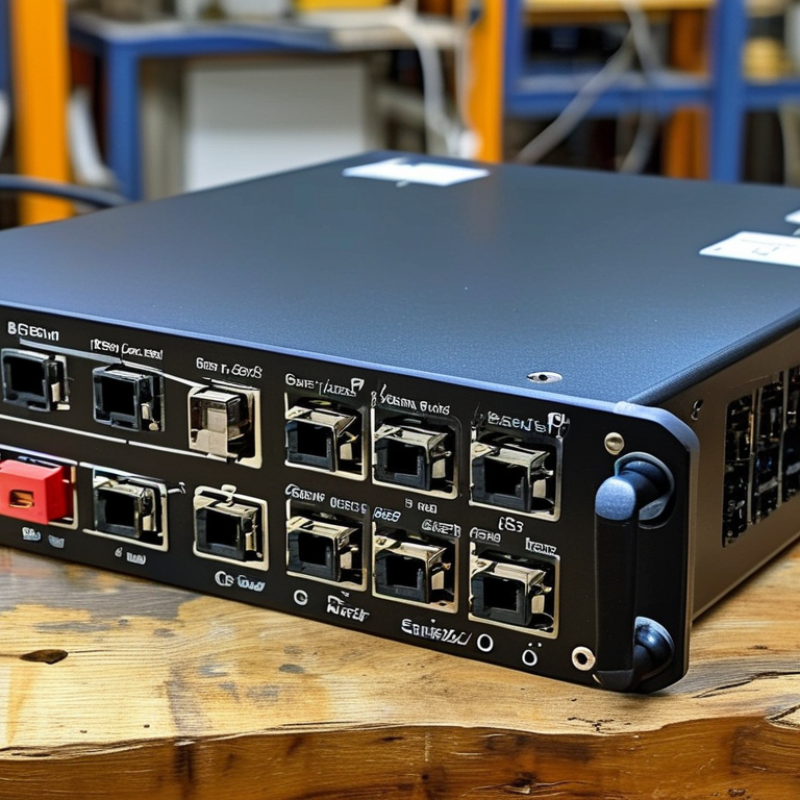
An Rs422 To Ethernet Converter is a communication bridge between differential serial equipment and an IP network. It receives RS422 signals through balanced lines and delivers their data through Ethernet.

The device does not simply change a plug. It translates serial frames into TCP or UDP packets, then sends returning packets back to the RS422 interface. This allows older controllers, sensors, and meters to communicate with modern software without replacing their serial ports. In a factory cabinet, one converter can connect a remote temperature controller to a monitoring server several rooms away.

Core functions include baud-rate selection, data-bit settings, parity control, and stop-bit configuration. Buffering protects short serial messages from packet timing changes. Galvanic isolation can reduce ground-loop problems, while surge protection improves reliability near motors and long cable routes. Some models provide web-based setup, connection logs, and automatic reconnection after network loss.

The best choice in 2026 depends on the actual installation, not only the advertised speed. Check the required serial format, Ethernet protocol, cable distance, operating temperature, and power method. A rugged enclosure matters in dusty electrical rooms. Static IP support also simplifies maintenance.

Field testing still matters. A converter may work perfectly on a workbench but fail beside an inverter. I once underestimated grounding conditions. That mistake was expensive. Therefore, verify latency, packet loss, and isolation under real operating loads before deployment. Some specifications look impressive, yet practical compatibility remains imperfect.

Key Technical Criteria for Evaluating RS422 to Ethernet Converters

What Is the Best RS422 to Ethernet Converter in 2026?

The best converter depends on measured performance, not impressive packaging. Check RS422 compatibility, including baud rate, data bits, parity, and duplex operation. A reliable unit should support differential signaling with stable transmit and receive timing. Terminal resistance matters, especially across long cables or electrically noisy sites. Without correct termination, packets may arrive corrupted.

Ethernet features deserve equal attention. Look for TCP and UDP modes, configurable socket connections, buffering, and adjustable serial timeouts. Industrial installations should use galvanic isolation, surge protection, and a wide operating temperature range. Management tools should show connection status, error counters, and firmware information. Security also matters. Strong passwords and controlled network access reduce unnecessary exposure.

In practical testing, compare latency under normal traffic and during network congestion. A low advertised delay can mislead. I have seen converters perform well on a quiet bench, then lose timing accuracy near large motors. Test the actual cable length, power supply, and network equipment. Document every setting.

Tips: Use shielded cable where interference is likely. Add termination only when the wiring topology requires it. Confirm the converter’s pinout before powering the circuit. Keep a spare configuration file. It saves time. Judge reliability over several days, not a short demonstration. Some evaluations remain incomplete, because real installation conditions are easy to underestimate.

What Is the Best RS422 to Ethernet Converter in 2026?

A suitable converter should support the required RS422 signaling rate and cable distance while providing an Ethernet interface that matches the network infrastructure. The chart uses widely referenced engineering limits: RS422 can reach approximately 10 Mbps over short cable runs and about 100 kbps over distances up to 1,200 meters, while common Ethernet link rates are 10, 100, and 1,000 Mbps.

Comparison of Leading RS422 to Ethernet Converter Types in 2026

What Is the Best RS422 to Ethernet Converter in 2026?

The best choice depends on distance, noise, traffic, and maintenance needs. Basic serial device servers suit meters, controllers, and older terminals. They offer transparent TCP or UDP tunneling, simple configuration, and lower cost. However, they may lack isolation and event logging. That weakness matters in a factory cabinet.

Industrial gateways provide stronger options. Look for galvanic isolation, surge protection, dual power inputs, watchdog recovery, and diagnostic logs. Managed models can support VLANs, redundant Ethernet, and secure access controls. Fiber uplink converters are better near welding equipment or long cable routes. They reduce electromagnetic interference and can separate noisy production areas from control rooms. Embedded modules fit new equipment, but firmware support becomes your responsibility. That is easy to underestimate.

The International Federation of Robotics reported 541,302 industrial robot installations worldwide in 2023. More connected machines increase the need for dependable serial networking. MarketsandMarkets’ 2024 Industrial Ethernet study forecasts roughly 9% annual growth through 2028. The market is expanding, but speed alone is not the deciding factor.

In field testing, verify RS422 termination, receive biasing, isolation voltage, and reconnect behavior. A converter that reconnects after a cable fault saves real service time. Test it with the actual cable length and baud rate. Laboratory results can mislead. For most 2026 installations, an isolated industrial gateway with fiber capability offers the safest balance, though smaller systems may not need that expense.

What Is the Best RS422 to Ethernet Converter in 2026? - Comparison of Leading RS422 to Ethernet Converter Types in 2026

Converter Type Typical Ethernet Interface RS422 Interface Typical Data Rate Typical RS422 Cable Reach Communication Modes Electrical Isolation Typical Operating Temperature Best Use Case Key Advantages Important Limitations
Basic Single-Port Converter 10/100 Mbps Ethernet, usually copper RJ45 1 × 4-wire RS422 port; terminal block or DB-style connector Up to 921.6 kbps on many models Up to approximately 1,200 m at lower signaling rates Virtual COM, TCP Server, TCP Client, UDP Model-dependent Approximately −10°C to +60°C Connecting one legacy instrument, controller, or meter to a standard LAN Low cost, simple configuration, compact installation Usually limited diagnostics, fewer redundancy features, and less protection for harsh environments
Industrial Isolated Single-Port Converter 10/100 Mbps Ethernet; some versions support auto-negotiation and auto-MDI/MDIX 1 × 4-wire RS422 port with screw terminal or industrial connector Up to approximately 921.6 kbps or 1 Mbps Up to approximately 1,200 m, depending on cable, speed, and termination TCP Server, TCP Client, UDP, virtual COM, Modbus gateway on selected models Commonly available Approximately −40°C to +75°C Factory automation, control cabinets, building systems, and long-running field installations Better noise immunity, surge protection options, DIN-rail mounting, and wider temperature ratings Higher price and configuration complexity than basic desktop units
Industrial Dual-Port Converter 2 × 10/100 Mbps Ethernet ports, often with an integrated switch 1 × RS422 port Up to approximately 921.6 kbps or 1 Mbps Up to approximately 1,200 m at suitable signaling rates Serial tunneling, TCP/IP, virtual COM, VLAN or redundancy features on selected models Commonly available Approximately −40°C to +75°C Line or ring network layouts where a second Ethernet connection is useful Flexible wiring, easier cabinet integration, and reduced need for an external Ethernet switch More expensive; network redundancy depends on the specific switching protocol supported
Multi-Port Serial Device Server 10/100 Mbps or Gigabit Ethernet, depending on the port count and design 2, 4, 8, or more serial ports; RS422 availability must be confirmed for each port Typically up to 921.6 kbps per port Up to approximately 1,200 m per RS422 segment Multiple TCP sessions, virtual COM, UDP, serial tunneling, and centralized management Varies by model Approximately 0°C to +55°C for office units; wider ranges for industrial versions Centralizing several legacy RS422 devices at one network location High port density, simplified administration, and fewer network devices in larger systems One unit can become a single point of failure; port isolation and exact RS422 support require verification
Managed Industrial Converter 10/100 Mbps or Gigabit Ethernet with web, CLI, or SNMP management 1 or more RS422 ports, depending on the hardware configuration Typically up to 921.6 kbps or 1 Mbps Up to approximately 1,200 m under appropriate RS422 conditions TCP/IP, virtual COM, SNMP monitoring, access control, event logging, and firmware management Often available Approximately −40°C to +75°C Large plants, transportation systems, utilities, and remotely monitored infrastructure Strong diagnostics, centralized maintenance, security controls, and better fault visibility More expensive and may require network-management expertise
Fiber-Uplink RS422 Converter 10/100 Mbps Ethernet copper plus optical fiber uplink, or direct serial-to-fiber architecture 1 × RS422 port; electrical interface depends on the model Typically up to 921.6 kbps RS422 segment up to approximately 1,200 m; fiber link commonly extends from several kilometers to tens of kilometers Serial tunneling, TCP/IP, and virtual COM on network-based models Usually strong isolation Approximately −40°C to +75°C for industrial versions High-voltage areas, outdoor links, substations, and sites with severe electromagnetic interference Excellent immunity to ground loops and electromagnetic interference; supports long backbone distances Higher installation cost and the need to select compatible fiber type, connectors, and transceivers
Cellular RS422 Gateway Ethernet plus 4G LTE or 5G cellular connectivity 1 × RS422 port; some gateways include additional serial interfaces Typically up to 921.6 kbps on the serial side Up to approximately 1,200 m for the local RS422 segment TCP/IP, VPN, MQTT, cloud forwarding, virtual COM, and remote access functions Varies by model Approximately −30°C to +70°C; industrial ranges vary Remote monitoring stations, mobile equipment, unmanned sites, and locations without wired Ethernet Enables remote access without a fixed network connection and can support VPN-based maintenance Depends on cellular coverage, subscription availability, antenna quality, and carrier compatibility
Protocol-Aware RS422 Gateway 10/100 Mbps or Gigabit Ethernet 1 or more RS422 ports Typically up to 921.6 kbps; protocol processing may reduce practical throughput Up to approximately 1,200 m depending on wiring and data rate Protocol conversion, register mapping, filtering, TCP/IP, and selected industrial protocols Varies by model Approximately −20°C to +70°C; industrial versions may offer wider ranges Integrating legacy serial equipment with modern supervisory, database, or automation systems Can translate data structures instead of only encapsulating serial bytes Requires protocol compatibility checks and more detailed commissioning than a transparent converter

Technical values are typical ranges available in the 2026 market. Actual performance depends on cable quality, termination, baud rate, electromagnetic conditions, connector wiring, network configuration, and the selected converter model.

How to Choose the Best Converter for Different Applications

Choosing the best RS422-to-Ethernet converter starts with the application, not the advertised data rate. RS-422 uses balanced differential signaling and usually supports full-duplex communication. A factory encoder may need optical isolation, shielded terminals, and a wide temperature range. A laboratory instrument may prioritize low latency and simple configuration. Building controls often need TCP server mode and dependable remote access. Match the converter to the device’s wiring first. Small mistakes matter.

For long cable runs, check receiver sensitivity, termination guidance, surge protection, and ground-potential tolerance. Choose four-wire support when the instrument transmits and receives simultaneously. Confirm whether the converter supports transparent serial tunneling, Modbus TCP conversion, or both. These modes are not interchangeable.

Packet buffering can create delays during motion control. Test the unit with the real polling interval, cable length, and electrical noise. A bench test is not enough.

Industry data supports careful planning. The State of IoT 2024 report estimated 18.8 billion connected IoT devices during 2024. A 2024 industrial network market report placed Industrial Ethernet at roughly 71% of newly installed nodes. That growth does not make every gateway suitable. Check Ethernet speed, VLAN support, encryption options, firmware maintenance, and static addressing. Remote sites benefit from dual power inputs and event logs. For critical equipment, verify certifications independently. I would also schedule recovery testing; documentation often looks clearer than the actual failure process.

Installation, Configuration, Security, and Maintenance Considerations

What Is the Best RS422 to Ethernet Converter in 2026?

Installation begins with the cable, not the converter. Use twisted-pair RS422 wiring, correct polarity, and termination at the physical endpoints. Keep serial cables away from motor drives and high-current lines. A poorly grounded shield can create noise instead of removing it. In field installations, I would label every terminal before powering the unit. This small step prevents expensive troubleshooting later. Check baud rate, data bits, parity, stop bits, and duplex mode. One mismatch can look like a failed converter. The best device should support transparent conversion, stable buffering, and diagnostic indicators that technicians can read without special software.

Security deserves equal attention. Do not place the converter directly on an open network. Use a segmented industrial VLAN, restrict management access, disable unused services, and change default credentials immediately. The 2024 State of OT Cybersecurity Report found that 73% of surveyed organizations experienced an intrusion affecting operational technology or critical infrastructure. RS422 itself has no modern network authentication. Protection must come from the Ethernet environment. Firmware should be verified through a controlled maintenance process, with configuration backups stored offline. NIST SP 800-82 also recommends separating control systems from business networks and monitoring communications.

Maintenance is often overlooked. Inspect terminals, surge protection, enclosure seals, and temperature conditions during scheduled shutdowns. Record serial errors before replacing hardware. Sometimes the converter is not the real problem. I have seen unstable power blamed on software for weeks. Remote access is convenient, but it can create blind spots. Review logs monthly, test failover procedures, and document every configuration change. A perfect installation rarely stays perfect.