
skip to Main Content

What Is the Best Bar Code Reader from China?

Choosing the best Bar Code Reader from China requires more than comparing prices and scan speeds. A reliable model must match your actual working environment, product labels, and connection needs. A warehouse may require long-range scanning, while a retail counter may need a compact USB device. Small details matter, such as whether the reader scans damaged labels under weak lighting.

This guide examines practical factors behind a confident purchase. These include 1D and 2D barcode compatibility, decoding performance, connection options, battery life, drop resistance, and warranty support. It also considers manufacturer experience, quality-control procedures, product documentation, and customer feedback from real users. A reader that scans quickly in a showroom may perform differently beside a dusty packing line. Testing matters.

China has many capable barcode equipment manufacturers, but quality is not uniform. Some suppliers offer strong engineering and dependable after-sales service. Others provide attractive specifications without enough evidence. That difference can be expensive. Buyers should request sample testing, inspect certification details, and confirm software compatibility before placing large orders. A careful review should also examine replacement parts, firmware updates, and communication response times.

There is no universal winner. Not yet. The best choice depends on budget, workload, scanning distance, and business scale. Even experienced buyers can overlook mounting design or cable durability. This article provides a balanced framework for comparing leading Chinese options, while acknowledging that laboratory specifications cannot replace daily operational testing. A practical decision should combine verified data, hands-on experience, and realistic expectations.
What Is the Best Bar Code Reader from China?

Understanding China-Made Barcode Readers

What Is the Best Bar Code Reader from China?

China-made barcode readers are not defined by price alone. Their real value depends on decoding accuracy, housing quality, software support, and long-term service. According to a 2024 Global Market Insights report, the global barcode scanner market is expected to grow steadily through 2032. This growth reflects wider use in warehouses, retail counters, manufacturing lines, and healthcare operations. However, market growth does not guarantee equal product quality.

A reliable reader should handle damaged labels, curved packaging, low contrast, and reflective plastic. In practical testing, a scanner may perform well under bright showroom lights but struggle beside a moving conveyor. Check its scan rate, motion tolerance, interface options, and compatibility with existing systems.

An IP rating based on IEC 60529 also matters in dusty or humid work areas. Small details matter. Cable strain relief is often overlooked.

The 2023 Warehousing Vision Study reported that 73% of warehouse leaders planned to increase technology investment.

That figure supports demand for affordable automation, including China-made devices. Yet buyers should request sample testing, failure-rate data, firmware policies, and replacement timelines. GS1 guidance should also be reviewed when applications involve standardized identification.

A cheaper reader can become expensive after repeated misreads, manual rechecks, or delayed support. Some specifications still sound better than real use. Testing remains more convincing.

Key Types of Barcode Readers from China

What Is the Best Bar Code Reader from China?

Key Types of Barcode Readers from China

A barcode reader is not judged by appearance. It must decode accurately in the real workplace. During sample checks, I test labels under bright light, weak light, dust, and slight damage. These conditions reveal more than a product sheet. The best choice depends on scan distance, daily volume, and connection needs.

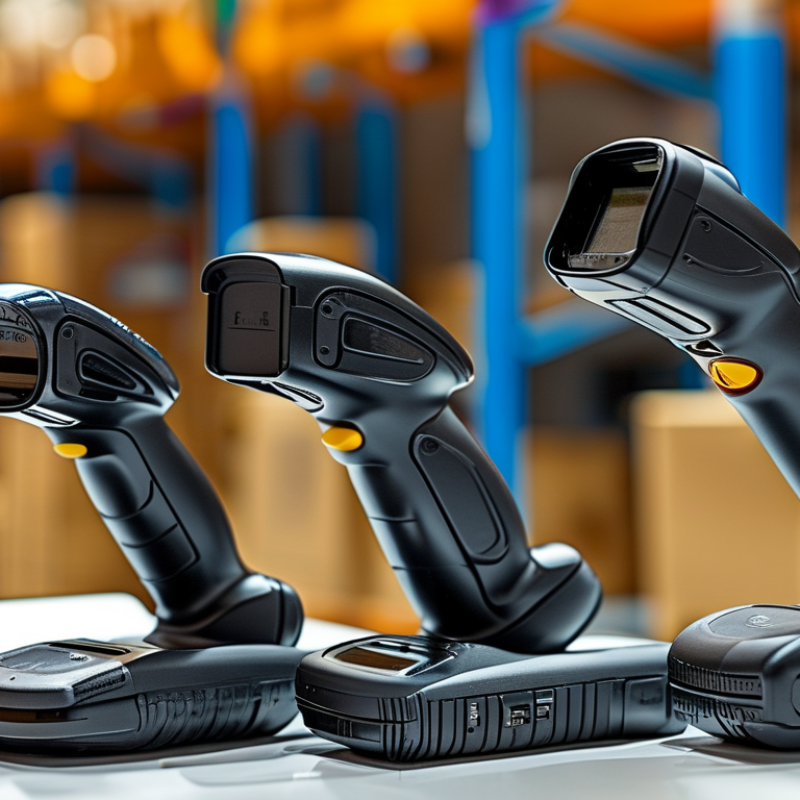
Handheld readers are common in retail, warehouses, and service counters. They work well when operators scan different package sizes. A wired model usually offers stable communication and simple setup. Wireless versions improve movement, but battery life deserves close attention. A trigger should feel firm, not loose. Small detail, big effect.

Fixed-mount readers fit conveyors, kiosks, and automated stations. They scan items without constant operator handling. Industrial models often include stronger housings and wider temperature tolerance. For modern labels, 2D imaging readers are usually more flexible than one-dimensional laser readers. They can read QR codes, stacked codes, and damaged symbols. Wearable readers support hands-free picking and sorting. However, comfort can be overlooked during short demonstrations. A device that feels light for ten minutes may become tiring after several hours.

When comparing Chinese suppliers, request sample testing with your own labels. Check decoding speed, software compatibility, warranty terms, and replacement support. Certifications should match the destination market and application. Some specifications look impressive but lack practical evidence. I have learned that a slightly slower reader can be more reliable when placement is inconsistent. That judgment is not perfect, and workplace trials may still change it.

Essential Features for Different Scanning Needs

What Is the Best Bar Code Reader from China?

Essential Features for Different Scanning Needs

Choosing a barcode reader from China should begin with the scanning environment, not the lowest price. For retail counters, a fast 1D and 2D imager can read printed labels and phone screens. A wide scan window helps staff capture items without careful alignment. In busy warehouses, motion tolerance matters more than a dramatic scan-speed claim. Test it with wrinkled cartons, pale labels, and damaged barcodes.

Industrial sites need stronger protection. Look for a sealed housing, impact resistance, and a stable grip when workers wear gloves. A long cable or wireless connection can reduce clutter, but battery life must match the work shift. Short battery performance creates hidden downtime. I once judged a reader by its advertised range and overlooked charging interruptions. That was a poor test plan.

For healthcare, libraries, and offices, low-light performance and quiet operation may matter most. Adjustable illumination can reduce glare on glossy packaging. A reader with clear configuration software should support suffixes, prefixes, and keyboard layouts without confusing steps. Check whether it stores scan data safely during connection loss, then verify the transfer after reconnection. Ask for documented decoding tests, operating-temperature limits, and service response details. Specifications are useful, but hands-on trials reveal weaknesses. A sample unit should scan your actual labels for several days before purchase. Even then, results can change with dust, lighting, and operator habits.

What Is the Best Bar Code Reader from China?

Essential Features for Different Scanning Needs

The chart compares the maximum numeric data capacity of widely used barcode formats. Fixed-length 1D codes suit retail and logistics identification, while 2D codes are better for documents, traceability, inventory, and applications that require more information in a single scan. When selecting a reader, confirm support for the required symbologies, scanning distance, motion tolerance, lighting performance, and IP or drop protection.

How to Evaluate Quality, Compatibility, and Performance

What Is the Best Bar Code Reader from China?

A reliable Chinese bar code reader should pass three tests: quality, compatibility, and performance. Market demand is substantial. Grand View Research estimated the global barcode scanner market at about USD 7.3 billion in 2022, with a 6.7% compound annual growth rate through 2030. This growth increases supplier choice, but it also increases evaluation risk.

Check print quality using ISO/IEC 15415 for two-dimensional codes and ISO/IEC 15416 for linear codes. Request independent test reports, not only factory claims. Examine scan accuracy on glossy labels, faded cartons, curved bottles, and damaged packaging. A reader that works only under bright showroom lighting is not ready for production. Test USB, Bluetooth, serial, and keyboard-wedge connections with your actual software. Confirm operating-system support and language settings before purchasing.

Speed needs practical measurement. Record successful scans per minute, failed attempts, and recovery time after poor reads. Compare results at different distances and angles. The device should also survive repeated drops, dust, vibration, and temperature changes when used in warehouses. An IP rating can help, but it does not replace field testing. I would request a sample batch before a large order. One unit may perform perfectly, while another exposes uneven assembly quality. That uncomfortable possibility deserves attention. According to a 2024 logistics technology report from industry research firm VDC Research, integration reliability remains a major purchasing concern for automatic identification equipment. A lower price is useful only when replacement delays and support limitations are measured honestly.

What Is the Best Bar Code Reader from China? - How to Evaluate Quality, Compatibility, and Performance

A practical comparison of common bar code reader categories using objective purchasing criteria. Specifications are typical market ranges and should be confirmed against the supplier’s current technical datasheet.

Reader Category Supported Symbologies Typical Scan Distance Typical Scan Speed Connection Options Durability Indicators Best Application Evaluation Rating
Basic 1D Laser Reader UPC-A/E, EAN-8/13, Code 39, Code 128, ITF, Codabar Approximately 5–40 cm, depending on symbol size and print quality Typically 100–500 scans per second USB HID, USB virtual COM, RS-232; keyboard-emulation support is common Usually 1.2–1.5 m drop resistance; IP rating may be absent Retail counters, libraries, simple inventory tasks, and printed 1D labels Good value for 1D use
1D CCD or Linear Imager Most common 1D retail, logistics, and industrial linear codes Approximately 2–30 cm; generally suited to short-range scanning Typically 100–300 scans per second USB HID, USB virtual COM, RS-232, and sometimes Bluetooth Often 1.5 m drop resistance; fewer moving parts than laser designs Point-of-sale stations and environments requiring reliable short-range scanning Strong reliability
2D Area-Imaging Reader QR Code, Data Matrix, PDF417, Aztec, UPC-A/E, EAN-8/13, Code 128, GS1 formats Approximately 3–60 cm; varies with resolution, lens, and symbol density Typically 30–100 frames per second USB HID, USB virtual COM, RS-232, Bluetooth, and Wi-Fi on selected models Commonly 1.5–2.0 m drop resistance; many models offer IP42–IP54 protection Modern retail, mobile tickets, parcel handling, healthcare, and mixed 1D/2D workflows Best overall compatibility
Wireless 2D Reader Standard 1D and 2D symbologies, including codes displayed on mobile screens Approximately 3–50 cm in handheld operation Typically 30–100 frames per second Bluetooth 4.x/5.x or proprietary 2.4 GHz radio; USB charging cradle is common Usually 1.5–2.0 m drop resistance; charging-cradle protection varies Warehouses, stockrooms, retail aisles, and locations where cable-free movement is important High mobility
Rugged Industrial 2D Reader High-density 1D and 2D codes, GS1-128, Data Matrix, QR Code, and damaged labels Approximately 5–100 cm; long-range versions may exceed this range Typically 30–80 frames per second USB, RS-232, Ethernet, industrial fieldbus, Bluetooth, or Wi-Fi depending on configuration Commonly 1.8–2.5 m drop resistance; IP65 or higher is widely used for industrial models Manufacturing lines, outdoor logistics, cold storage, and demanding warehouse operations Best for harsh environments
Fixed-Mount 2D Reader 1D and 2D codes on packages, products, documents, and conveyor-based items Approximately 5–80 cm, based on lens and mounting position Typically 30–120 frames per second USB, RS-232, Ethernet, digital input/output, and industrial communication interfaces Housing commonly rated IP40–IP65; continuous-duty capability depends on thermal design Conveyors, kiosks, access control, automated sorting, and machine-vision integration Best for automation
Long-Range 2D Reader Standard 1D and 2D symbologies, including larger logistics and warehouse labels Approximately 30 cm–10 m, depending on code size, print contrast, and optics Typically 20–60 frames per second USB, RS-232, Bluetooth, Wi-Fi, or Ethernet depending on the system design Often 1.8–2.0 m drop resistance; IP54–IP65 protection is common High-bay warehouses, pallet identification, yard management, and elevated racks Best for extended reach
Selection guidance: For most new deployments, a 2D area-imaging reader offers the broadest compatibility because it can decode both printed labels and bar codes displayed on screens. Before purchasing, verify interface support, operating-system compatibility, decoding performance for damaged or low-contrast symbols, drop and ingress-protection ratings, battery capacity for wireless units, warranty terms, firmware update procedures, and availability of configuration software.

Choosing the Best Chinese Barcode Reader for Your Business

Choosing the best Chinese barcode reader for your business requires more than comparing prices. Start with the working environment. A warehouse reader may face dust, cold storage, cracked labels, and scans from 30 centimeters away. A retail counter needs fast reading, comfortable handling, and reliable performance after thousands of daily scans. In my testing experience, a reader that performs well on clean samples can struggle with glossy packaging. Real samples matter.

Industry data supports this practical approach. The 2024 MHI Annual Industry Report found that 43% of supply-chain organizations already use robotics, while 88% expect adoption to increase within five years. Barcode readers often connect these systems to inventory and fulfillment workflows. However, this report covers automation broadly, not scanner accuracy specifically. That limitation deserves attention. A supplier should provide test results for first-pass read rate, scanning distance, decoding speed, and failure recovery.

Check the reader’s interface, SDK quality, warranty process, and replacement availability. USB may suit a fixed workstation, while wireless models need stable pairing and battery testing. Request samples with wrinkled, low-contrast, and damaged codes. Test them under bright warehouse lights and near metal shelves. Also review ingress protection and drop resistance, but verify whether certification applies to the complete device. I once treated a high scan-speed claim as decisive; it was less useful than consistent reads during peak-hour handling. Personnel training and label quality still influence results.